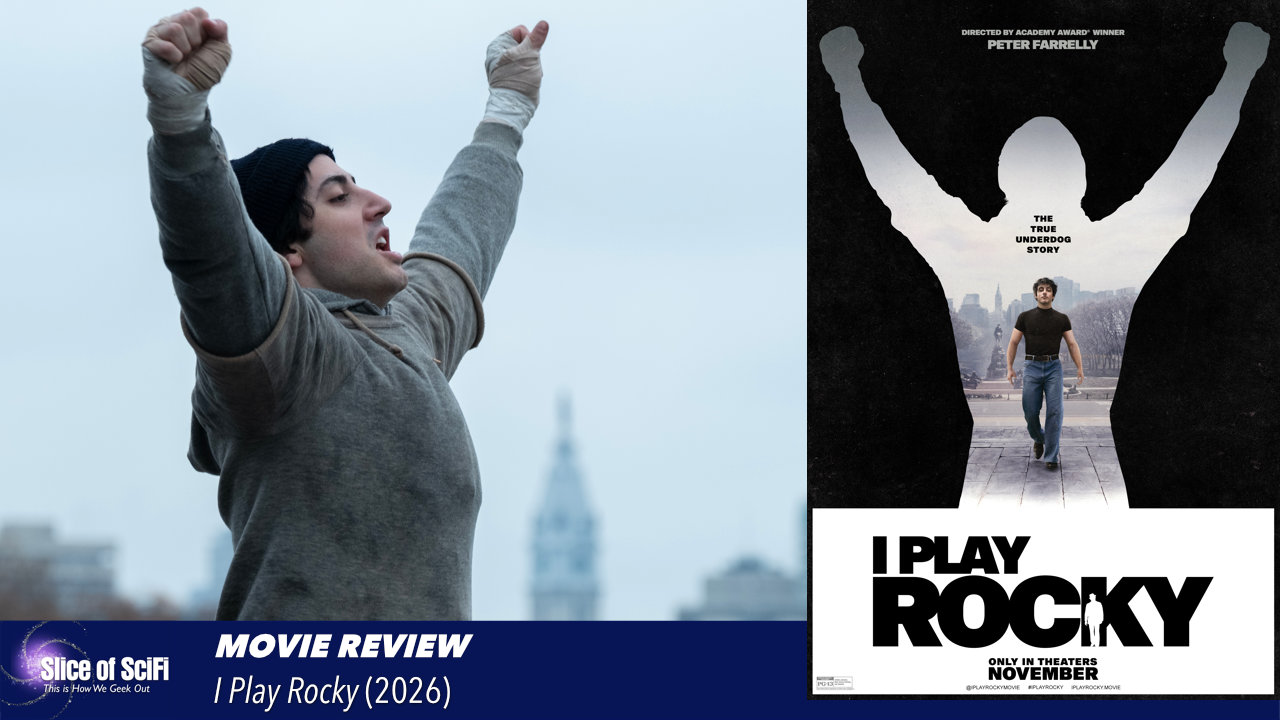
“I Play Rocky” is simply a remarkable film. While the facts about Sylvester Stallone’s struggle to make the movie “Rocky” and have himself star in it are out there for the world to see, it is another thing to make an engaging story based on that material. This picture succeeds in embedding the viewer into that time and space where you actively root for Stallone to succeed.
Since this is a biopic, and the story is well known, I won’t recap all the details here. Although I admit that I learned a few things about Stallone that I didn’t know. The use of forceps during his birth, for example, caused nerve damage which affected one side of his face and his vocal chords. This led to his distinctive tone and facial expressions.
I am not a huge fan of the original film. At the time, I couldn’t believe that “Taxi Driver” lost the Oscar for Best Picture to this movie. But watching “I Play Rocky” made me re-think that whole scenario.
In the picture, John G. Avildsen (the director of “Rocky”, played by Jay Duplass) says that he isn’t making a boxing movie, but rather a movie about a person who happens to be a boxer. Avildsen’s clarity of focus is key to making “Rocky” a story about an underdog.
Duplass is excellent as the director. He states from the beginning that he is a no-nonsense auteur who only does multiple takes when the first one doesn’t work. He says that people will hate him during the production and he doesn’t care. But he is perfect given one of the important arcs depicted in “I Play Rocky.”
The scenes of the actual filming of “Rocky” are a joy to those cinephiles who like behind the camera revelations and one of the main arcs of the story. It turns out that when Stallone (Anthony Ippolito) gets to star in his movie, he is given one month. The conditions are that he could not go over budget one dollar and could take no days off or Stallone would be replaced with a name star like Ryan O’Neal.
What ensues are insightful vignettes into how “Rocky’ was created. In one scene, Stallone punches a carcass only to discover that it is frozen and he has injured his hand. But rather than re-stage or cut the shot, he continues pounding the meat at his own expense.
On the first day Stallone runs 18 miles. “Rocky” was one of the first pictures to use the Steadicam as he ran up the steps of the Philadelphia Museum of Art. He is injured but has to keep going day by day.
Philadelphia didn’t have organized unions so that was why they filmed there. They had to shoot the ice-skating scene at night when they could rent the facility.
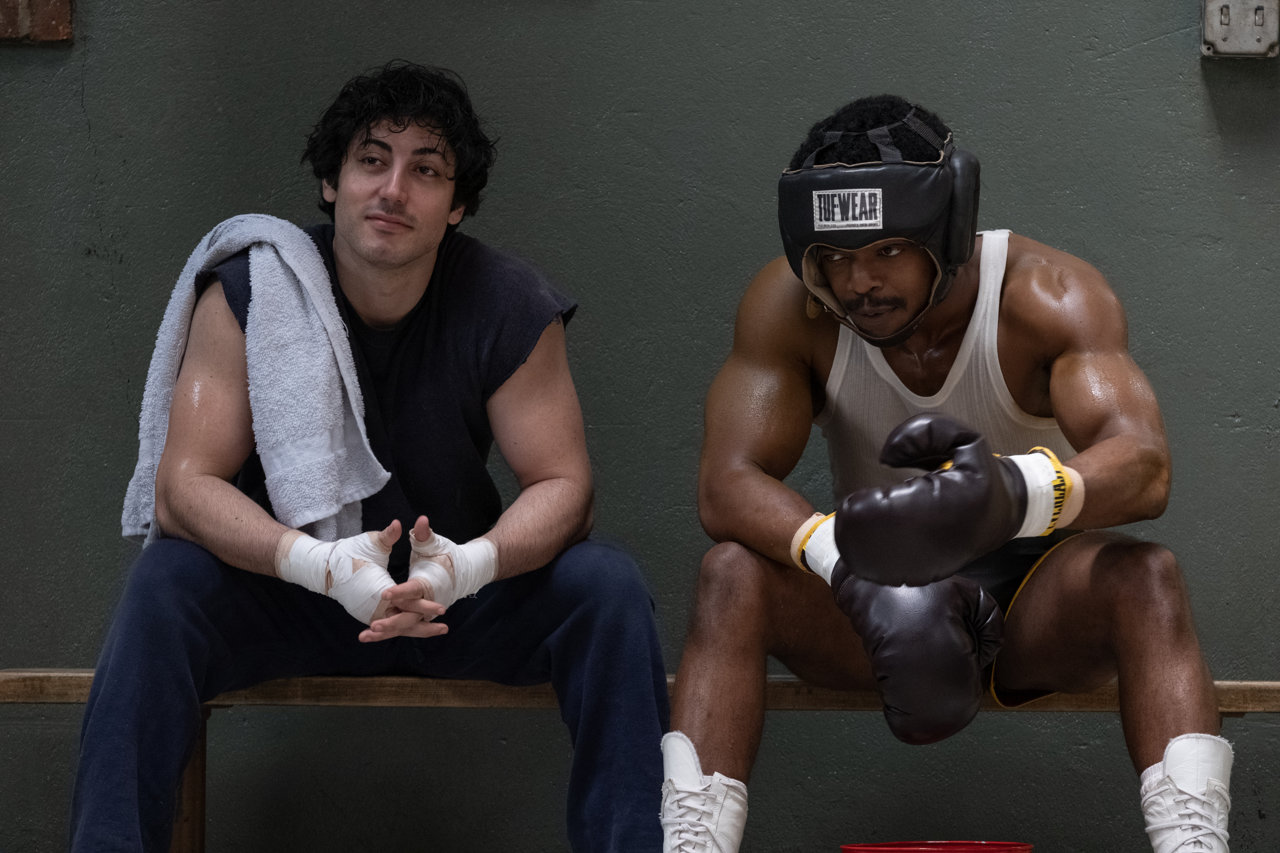
Even though you know that “Rocky” got made, the compelling screenplay makes you feel a palpable tension with each adverse event. You realize that real people went through these actual events and did feel the anxiety and tension of would they get this picture made.
None of this would be believable if the main character playing Stallone was a caricature. The casting of Anthony Ippolito as Stallone ended up being a masterstroke. He completely encapsulates the humanity, drive and humor of the now-veteran actor. I felt that I was watching Stallone because Ippolito dissolves so perfectly into him.
Ippolito’s performance is brilliantly matched by AnnaSophia Robb as Sasha Czack as Stallone’s partner. She doesn’t get that much screen time. But in every frame, she comes off as honest, pragmatic and supportive. She and Ippolito have great chemistry together. This is especially true during an argument inside a Volkswagen bug.
While I didn’t think that Matt Dillon was exceptional as Frank Stallone, Sr., I have to admit that I never realized it was him until the end credits! I was surprised that no other members of Stallone’s family are portrayed. Did they not want to be portrayed or was it a creative choice?
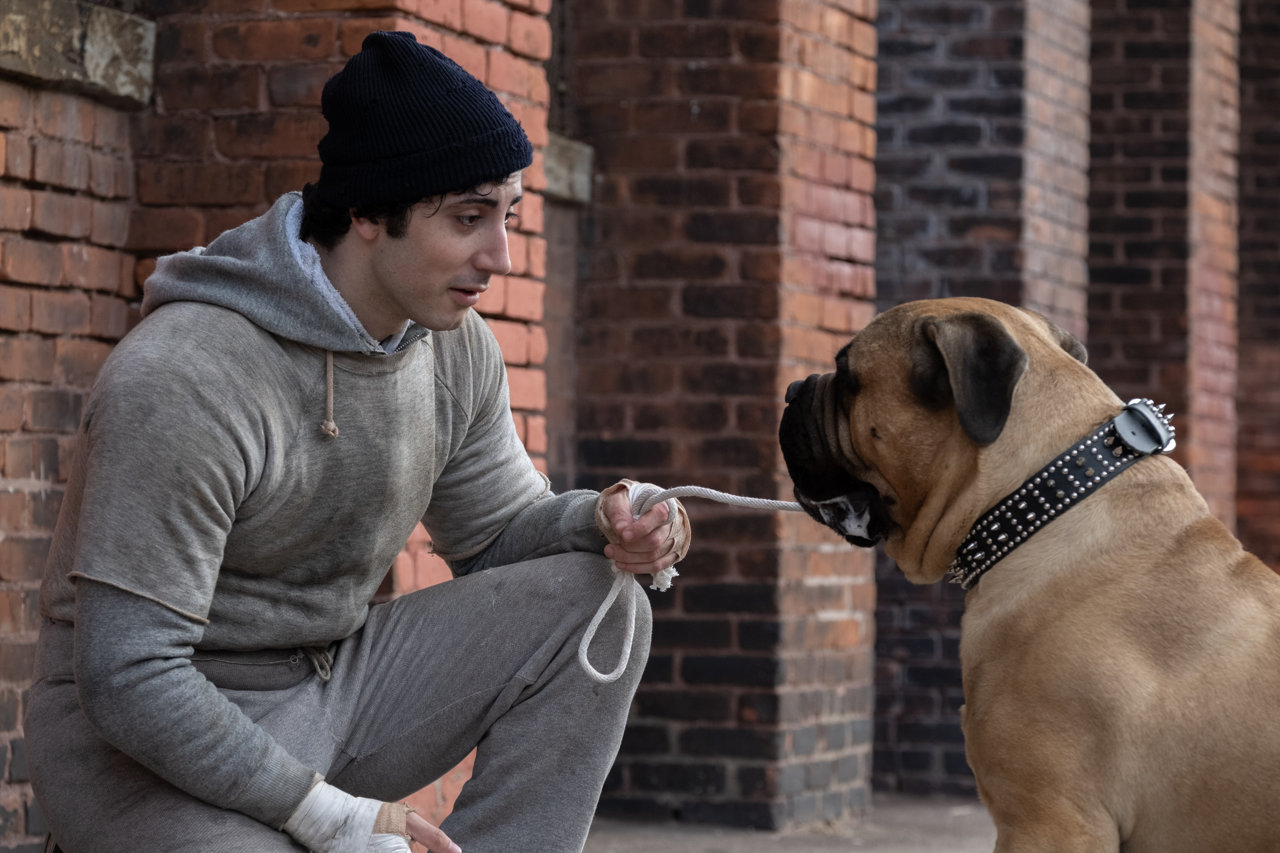
The story of Stallone and his dog are legendary. In the film, Stallone finds him in an alleyway as a puppy. Soon he is huge and the struggling Stallone has to find a way to feed him. It is giving nothing away to reveal that Stallone sells the dog and then buys him back. Why these scenes are noteworthy is that they are filled with pathos.
“I Play Rocky” also works humor into the screenplay. When Carl Weathers (Stephan James) tries to box, he is beat up despite claiming to have been a boxer. He states that all actors lie to get the part. Talia Shire (Kiki Seto) does the same thing when she is asked to ice skate; she lied to get the part.
The other main arc is getting Stallone to play Rocky after he offers his screenplay to two producers. Leading up to this, we see him churning out screenplays (including “Paradise Alley”) while Sasha types them up. They face some trying financial times.
Stallone eventually is offered up to $360,000 for the screenplay if another actor plays “Rocky.” But in a powerful scene, he comments on how he would be a hypocrite to the main character in his screenplay if he didn’t fight for what he wanted.
The sets and costumes from the 70’s are spot-on accurate. Having lived through that time, I had to marvel at how technologically primitive by comparison to today it was. This sense of realism also heightens the vivacity of what is on screen.
All of these factors made “I Play Rocky” totally captivating for me. Even the repetitiveness of having the screenplay offer rise over time did not detract from my engagement with the story.
In sum, there is a “je ne sais quoi” about this movie that will draw you in, even if you don’t care about “Rocky” or Sylvester Stallone. Stay for a wonderful end-credits scene with Stallone on the Johnny Carson show.
Five out of five stars
The film is an electrifying true story about an unknown actor with an unshakable belief that he wasn’t just meant to write Rocky—he was meant to be Rocky Balboa. Told “no” at every turn, Sylvester Stallone bets everything on himself, holding the line on playing the lead against seemingly impossible odds. The result is the ultimate underdog story behind the ultimate underdog movie.
Cast: Anthony Ippolito, AnnaSophia Robb, Toby Kebbell, P.J. Byrne, Jay Duplass, Kiki Seto, featuring Matt Dillon with Stephan James and Tracy Letts
Directed by: Peter Farrelly
Written by: Peter Gamble
"I Play Rocky" is a remarkable film about a remarkable story
Summary
Even though you know that “Rocky” got made, the compelling screenplay makes you feel a palpable tension with each adverse event. You realize that real people went through these actual events and did feel the anxiety and tension of would they get this picture made.
None of this would be believable if the main character playing Stallone was a caricature. The casting of Anthony Ippolito as Stallone ended up being a masterstroke. He completely encapsulates the humanity, drive and humor of the now-veteran actor. I felt that I was watching Stallone because Ippolito dissolves so perfectly into him.