
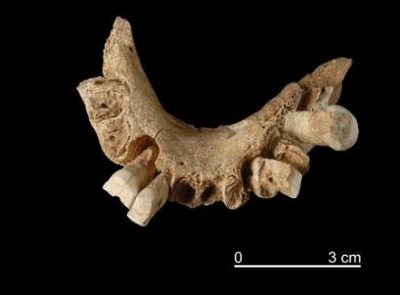
 A new cache of human bones and rudimentary tools dating back to over 1.2 million years ago have been unearthed in the northern part of Spain. These fossils prove that humans roamed in Europe far earlier than researchers had previously thought and taught. This exciting find places humans in Europe about 400,000 years before any previous earliest findings.
Excavated at the site was a jaw bone, some human teeth and simple tools. These were found inside a cave outside the city of Burgos, Spain. The findings have been published in Nature Magazine.
“These are the oldest human remains in Europe. With this fossil, we can say it [European Continent] was populated earlier than was thought,” researcher Andreu Olle told Reuters News Service.
“The find adds weight to the theory that early humans spread from Africa via the Middle East, not across the Straits of Gibraltar separating Africa from Europe, because the jaw was a similar shape to one unearthed in the central Asian country of Georgia thought to be 1.7 million years old,” stated journalist Ben Harding who covered the find.
[In the above — An undated handout photograph released on March 26, 2008 shows the top view of a jaw bone, which could belong to the oldest known European, excavated by Spanish researchers in a cave at the Atapuerca site near the city of Burgos.]
(Jordi Mestre/EIA/Handout/Reuters)

Leave a Reply