Written by: Benjamin Radford (LiveScience’s Bad Science Columnist)
 If you’ve visited a bookstore in the last few years, you may have seen those cute books about fairies or gnomes where it looks like the author found and smashed one of the poor creatures between the pages. The whimsical drawings of the squashed little folk are at once both cute and gross; you almost expect to see fairy intestines sticking out like a gruesome bookmark.
These are fictional field guides to strange and fantastic creatures lurking at the edges of everyday life.
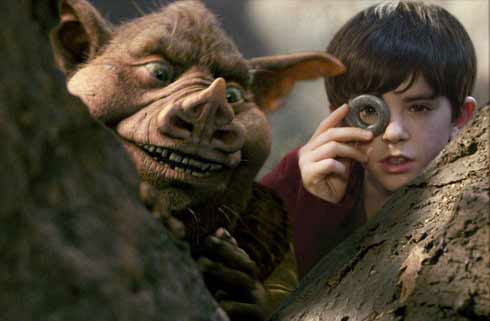
A book very much like this is at the center of the new film “The Spiderwick Chronicles.” In the film, a man named Arthur Spiderwick (he had his name changed because Arthur Smith wasn’t evocative enough) wrote just such a book. In “Arthur Spiderwick’s Field Guide to the Fantastical World Around You,” the author describes elves, fairies, goblins, dragons, ogres, leprechauns, sea serpents, and other such fantastical creatures. Spiderwick disappeared, but his great nephew found the book and unwittingly unleashed a pack of goblins who threaten the world.
Not to suggest that Arthur Spiderwick was a plagiarist, but such bestiaries have existed for centuries.
While fictional authors like Spiderwick (and real authors such as J.R.R. Tolkien) greatly popularized creatures like dragons, mermaids, elves, and fairies, belief in their existence dates back far earlier. (In fact some stories of the Loch Ness monster are derived from Scottish folklore about kelpies and water horses.)
Earlier times
There was a time long before XBox — even before the Atari 2600, if you can imagine — before television brought the world’s wonders into every American household. A century or so ago, the public was much less sophisticated about what was real and what wasn’t; much of the world was still unexplored and shrouded in mystery.
Traveling shows brought amazing creatures from around the world to people who had never seen such wonders. Animals that now seem commonplace, or at least not extraordinary, were considered very exotic just a century ago. Bizarre animals called “cameleopards,” for example, appeared as attractions in carnivals and circuses during the 1800s. These unusual creatures combined the long neck and head shape of a camel with the spots of a leopard. The public flocked to see these fantastical animals (we now know them as giraffes).
For many having seen a cameleopard, platypus, or kangaroo for the first time, dragons and elves did not seem so far-fetched.
Enter the fairies
It wasn’t so long ago that at least some of Spiderwick’s fanciful creatures were believed to exist.
In 1917, two teenage cousins named Elsie Wright and Frances Griffiths played with fairies and gnomes in the English countryside near Cottingley. Interacting with imaginary fairy friends would probably be considered normal behavior for 10- and 16-year-old girls, but the pair insisted that the fairies were real. They even provided proof in the form of five photographs showing little fairy folk playing with the girls.
While some dismissed the photos as obvious fakes, many others were not so sure.
Sir Arthur Conan Doyle, creator of Sherlock Holmes, believed that the fairies were real, and wrote a book titled “The Coming of the Fairies,” in which he discussed the fairies and his belief that their existence had been proven. The girls eventually confessed to the hoax, but many were taken in, and the reality of fairies was the subject of debate among some adults for decades.
Fake field guides
There are also a few modern books that claim to be field guides to unknown creatures around us.
For example, Loren Coleman and Patrick Huyghe have written two “field guides,” one on mystery primates such as Bigfoot, and the other on lake and sea monsters.
Fantasy role-playing games such as Dungeons and Dragons have field guides with detailed information about fantastical creatures as well (did you know the leprechauns live in families of up to 20, and that the life span of a goblin is about 50 years?).
Ultimately, of course, Spiderwick and his fairies are fictional. But audiences will learn one thing about goblins from “The Spiderwick Chronicles”: They are computer-generated and look like cousins of the green Mr. Mucus guy from the Mucinex commercials. Good thing he’s not squashed between the pages of some field guide. Yuck!

Leave a Reply