Written by: Jeanna Bryner (Space.com Staff Writer)
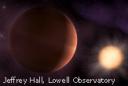
Take the announcement at the end of May of a massive planet, dubbed TrES-3, that zips around its star in an amazingly rapid 31 hours, giving the planet a 1.3-day year. Astronomers issued a press release, but you might not have heard about it because the discovery was so overshadowed by other planet announcements and barely received news coverage.
“It’s pretty routine now,” said Alan Boss, a planet formation theorist at the Carnegie Institution of Washington. “Most planets that are found are not deemed worthy of a press release because they are sort of becoming ‘one more planet.'”
The total is now more than 200 extrasolar planets confirmed. And this is the tip of the iceberg in planet finds. Astronomers have more tools than ever, and technology is so advanced that planet discovery has become almost mundane.
The regularity of planet finds, luckily, is buffered by the wild variety in the discoveries themselves, including the following contrasts: nascent worlds of just a million years versus those that are billions of years old; hot gas giants and icy Neptune-like orbs; planets that whip around their parent stars with cosmic speed and others that seem to creep at a slug’s pace; and planets orbiting double-stars, red-dwarf stars and even so-called failed stars.
You can read Jeanna’s full article at SPACE.com.

Leave a Reply